
Shoreline Gutters and the Canopy That Fills Them
{{custom_values.city3_h2_1}
}
Few areas north of the city carry tree cover as dense as Shoreline, where established neighborhoods sit beneath a thick canopy of fir, cedar, and mature deciduous trees that never stop shedding. That heavy overhead growth is the single biggest reason gutters here fill so fast, dropping a continuous load of needles, cones, and leaves onto rooflines that already take the full force of Puget Sound rainfall. The damp climate keeps that debris from ever drying out, so it soaks and compacts into a dense mat rather than blowing free the way it might in a drier region. Settled in the trough, that mat slows every downspout and sets the stage for overflow the moment a real storm rolls through. Many Shoreline homes date to the mid-century era, and their original gutter systems were never designed for decades of accumulated growth from trees that have since matured into towering cover. Shaded lots compound the problem, breeding moss that creeps from the roofline down into the gutters and adds weight the brackets were never meant to hold. When water finally spills over a packed run, it follows the fascia down and gathers against the foundation, threatening exactly the structure the gutter exists to guard. Grasping how Shoreline's exceptional canopy density overwhelms a drainage system is where keeping one of these homes dry has to begin.
Clearing the Buildup You Cannot See
Real protection for a Shoreline home depends on the work that happens beyond what shows from the yard. The debris that does the most damage is seldom the loose material near the openings; it is the compacted buildup driven deep into downspout elbows and outlet drops, throttling flow where nothing is visible. Clearing only the surface clumps leaves those hidden chokepoints untouched, and the system reads as clean right up until a heavy canopy-fed rain proves it could never move a storm. Pulling debris out by hand along the whole run, then forcing water through each downspout until it runs clear, is the only way to confirm the system carries genuine volume. Under Shoreline's dense shade, moss adds a second front, migrating off the roof into the troughs and loading the gutters with damp weight that loosens fasteners and drags runs away from the fascia. The older rooflines common across these neighborhoods bring their own quirks, with original slopes and seams that have weathered decades of rain and need a careful eye. A complete visit accounts for all of it, weighing slope, seams, and fastening so a minor flaw is corrected before the wet season turns it into fascia rot or a problem at the foundation below.
Hand Clearing Along the Full Run
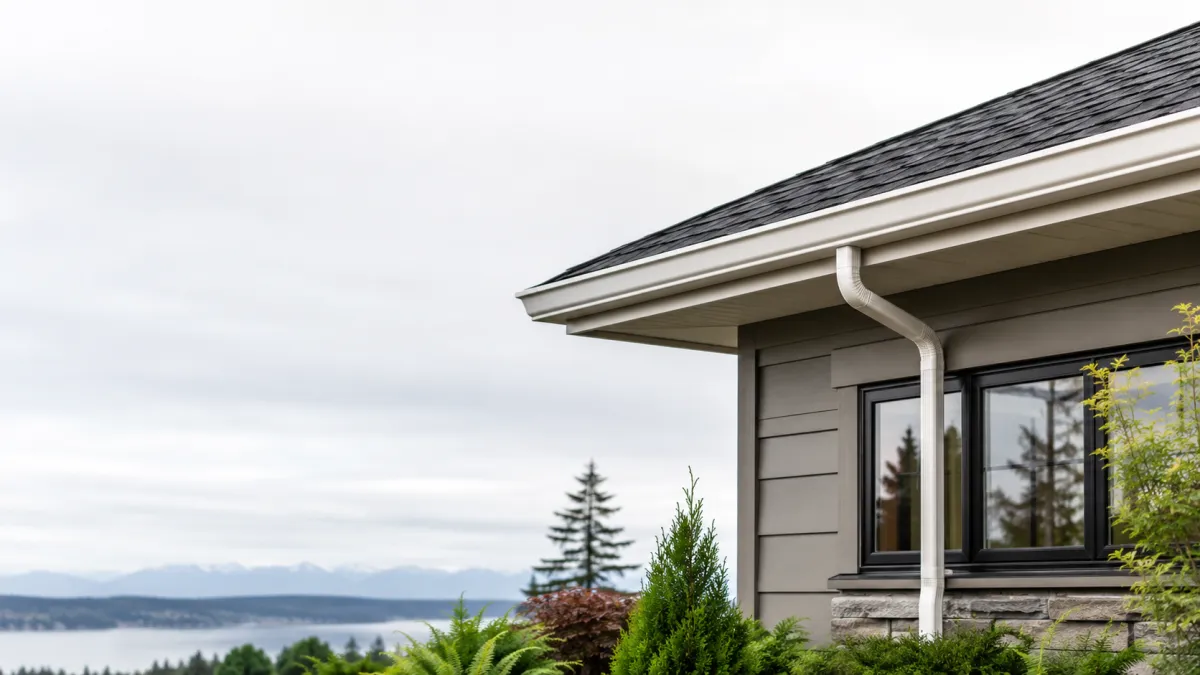
Hand removal carries extra weight in Shoreline, where the canopy loads a roof more heavily than almost anywhere nearby. Crews move along the entire length of each gutter run instead of clearing only the easy clumps near the openings, lifting out the packed needles, cones, and decomposed leaves that constant shade and rain have pressed into a solid layer. Beneath the towering tree cover that defines these neighborhoods, that buildup frequently runs unbroken for long stretches, and any packed section left behind becomes the point where water backs up and overflows later in the season. Clearing by hand also lays the trough open to inspection, revealing rust, separated seams, or low spots holding standing water that a hurried pass would never register. Each bit of removed material is bagged and carried off rather than scattered into the beds below, leaving the property tidy. This is unhurried, careful work, and on a Shoreline home buried under mature canopy it decides whether the gutters survive the winter or give out under the first heavy rain. Handling it thoroughly at the outset spares an owner the frustration of watching water pour over the edge weeks after a cleaning that only skimmed the surface.
Downspouts Flushed Until They Run Clear
A spotless trough means little when the downspout beneath it stays blocked, so much of the real work in Shoreline happens where no one is looking. Compacted debris from the heavy canopy settles into elbows and underground transitions, the precise spots where a clog can lurk while the visible gutter appears immaculate. Driving water through each downspout under full volume is the only trustworthy way to confirm it can carry a storm instead of just a passing shower. When a downspout sits silent during a downpour while water cascades over the gutter beside it, that quiet almost always points to a hidden blockage shoving water the wrong direction. Crews flush every drop and watch for the strong, sustained discharge that signals a clear path, then track any lagging line to its obstruction. Across Shoreline's many shaded, gently sloped lots, a failed downspout delivers water straight to the base of the house, so confirming flow is the entire purpose of the work rather than an afterthought. Clearing each line and steering its discharge well away from the structure is what keeps the canopy-driven rain from quietly migrating toward a home it should be running clear of. Under tree cover this heavy, a confirmed downspout path is the only thing that consistently carries away everything the canopy keeps sending down.

Roofline and Fastening Checked Closely
Verification closes out every Shoreline visit, because a cleaning should never end on assumption. Before crews depart, they confirm water drains as it must under real flow, watching each downspout run and checking that the gutters carry water toward the drops rather than pooling along a stretch. This is also when the broader system gets a close read: brackets worn loose under the weight of moss and soaked debris, seams beginning to separate, and runs starting to pull from the fascia after seasons under the canopy. Catching those early matters a great deal in Shoreline, where unrelenting shade and rain exploit any weakness fast and a small sag soon becomes overflow at the foundation. Owners receive a clear, candid summary of anything worth addressing, with no pressure and no invented urgency, just a grounded assessment of the system heading into the heaviest rains. That final review turns a routine cleaning into lasting protection, giving a Shoreline homeowner an honest, complete picture of their drainage well before the next storm tests what the canopy has been piling on all year. It is the difference between walking into the wet season confident the system was proven sound and simply trusting that it looked clean from the ground.
Seattle's Gutter Cleaning Climate Specialists
Proudly serving Seattle, Bellevue, Renton, Shoreline, Kirkland and Burien for 12+ years.
Comprehensive Gutter Cleaning Services in Seattle
Tailored to Your Needs
From routine gutter cleaning to moss removal and full downspout repair, we offer the complete range of exterior services Seattle homes need to survive the rainy season. Explore our core services below.
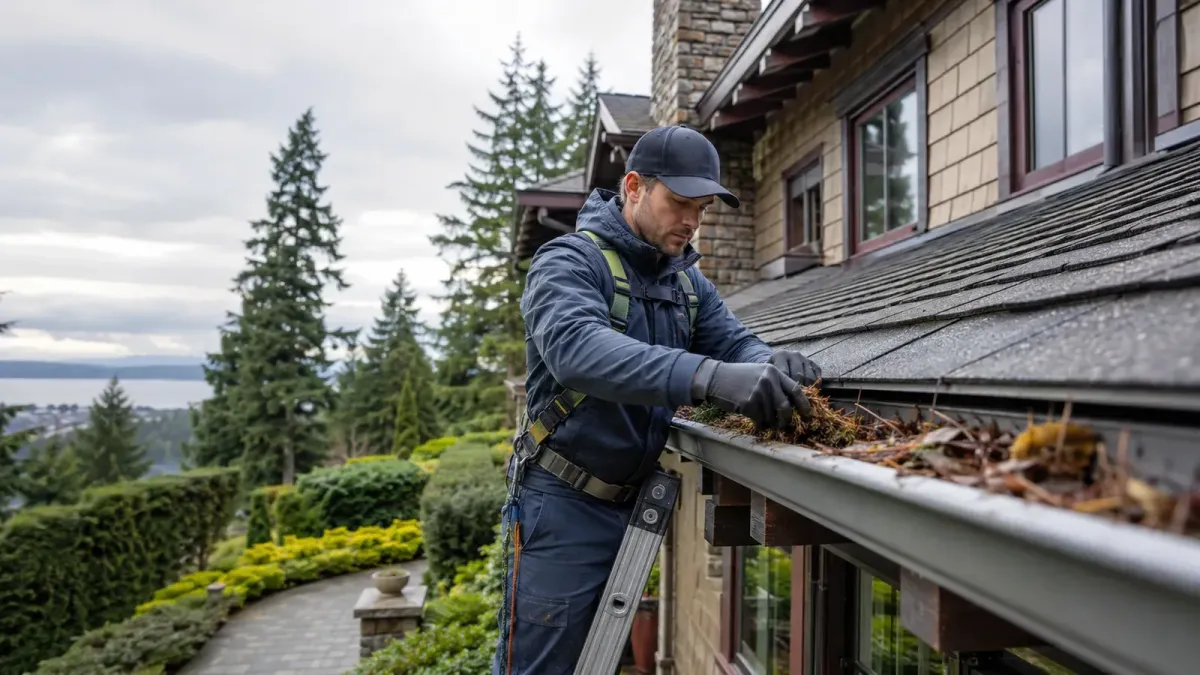
Hand cleaning and downspout flushing that keeps Seattle rainwater flowing away from your home.
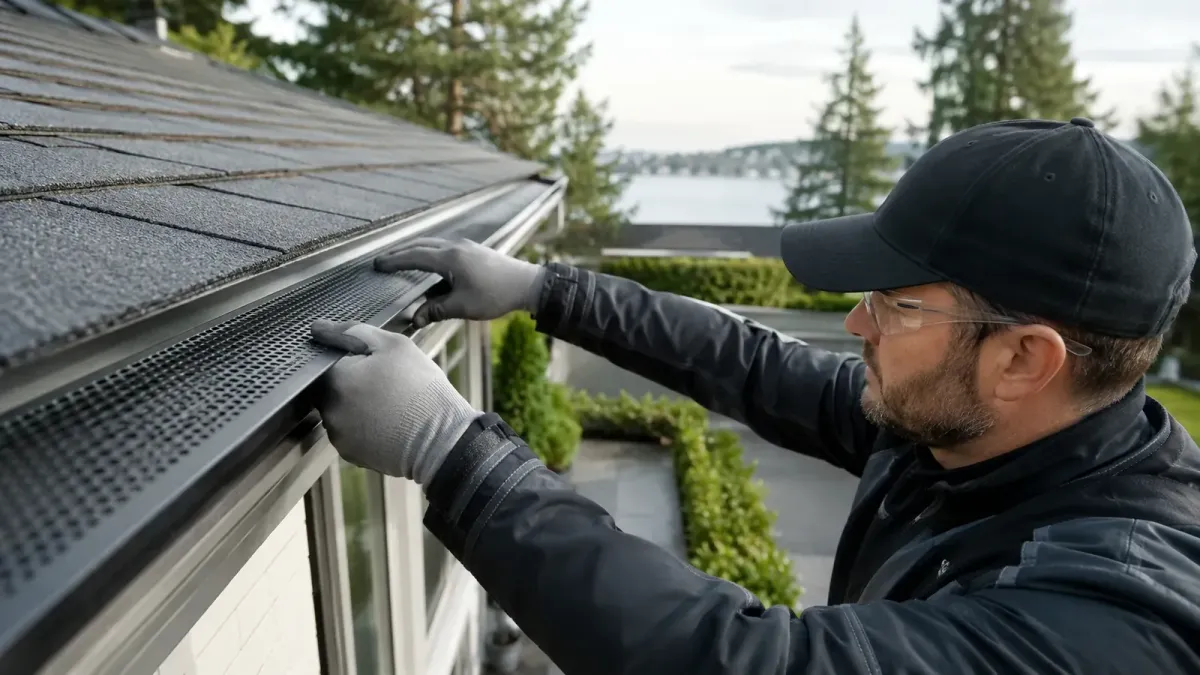
Gutter guard systems that block Seattle debris while letting heavy rainfall pass through.
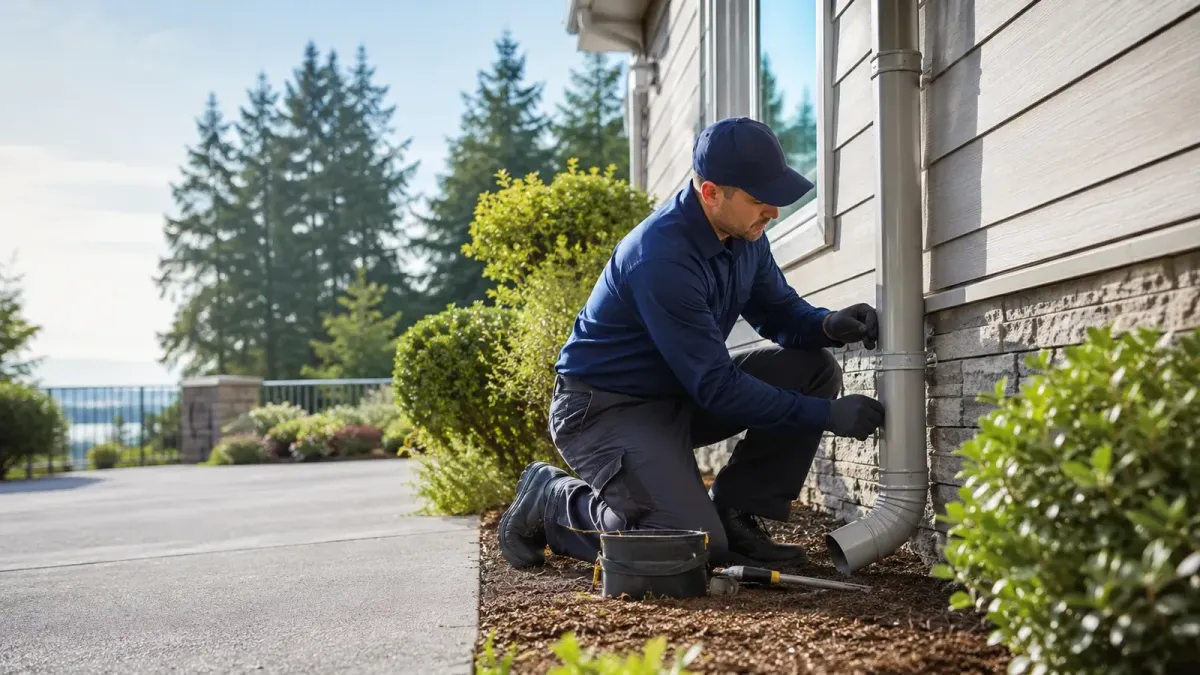
Downspout cleaning and repair that clears hidden clogs and restores proper drainage.
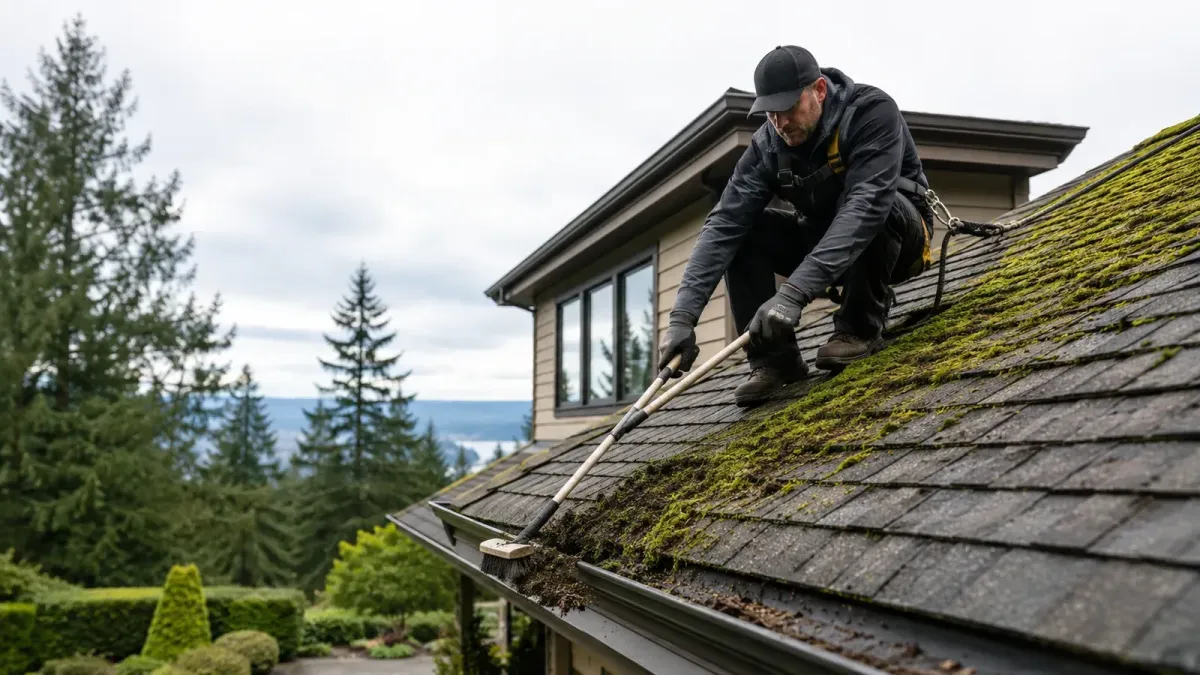
Roof moss removal that protects shaded Seattle roofs from long term damage.
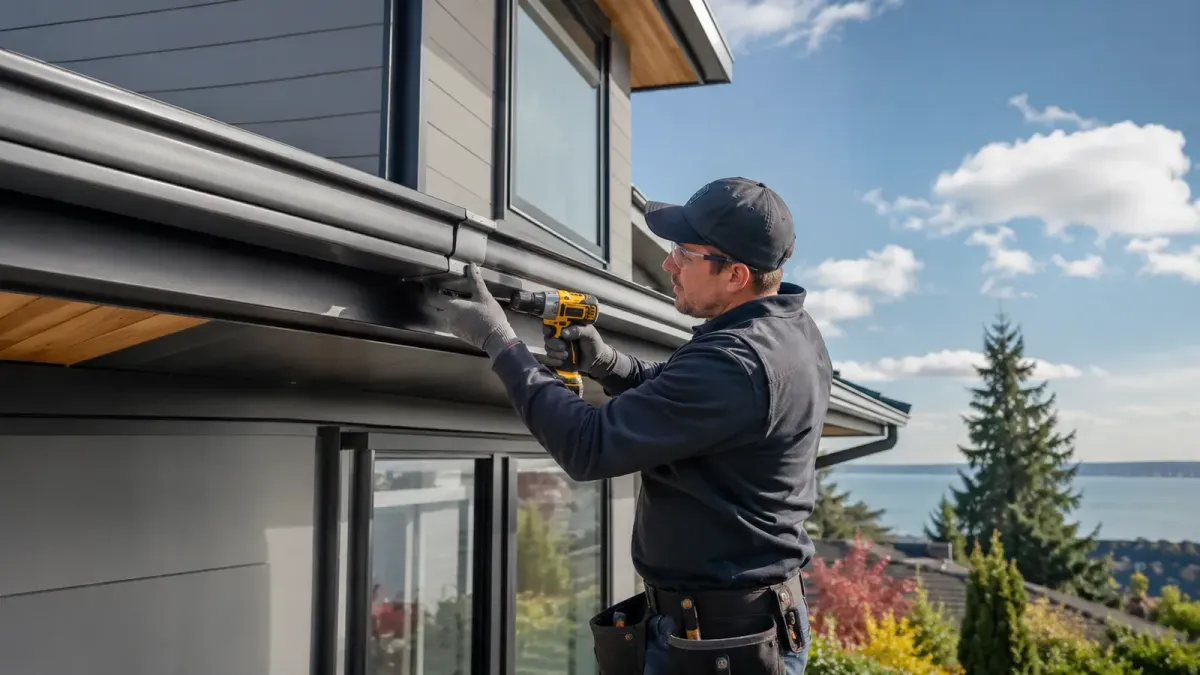
Gutter repair that fixes sagging, leaking, and pulling sections before winter rains hit.
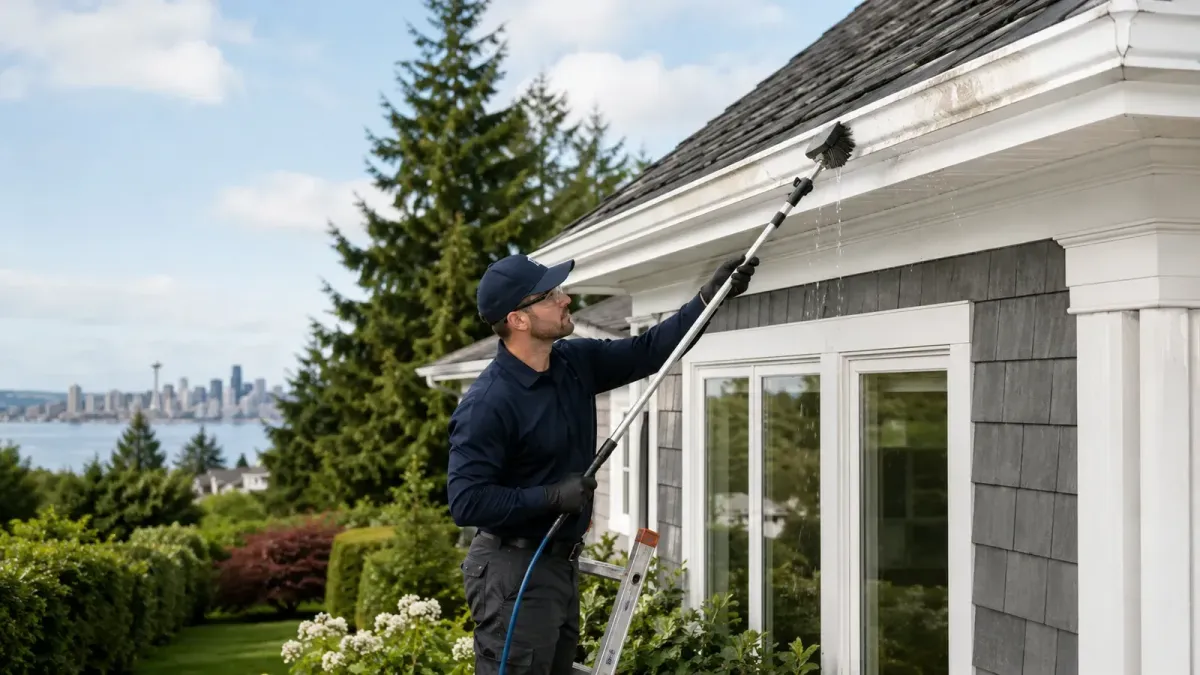
Gutter whitening that lifts the dark Pacific Northwest streaks off your exterior gutters.
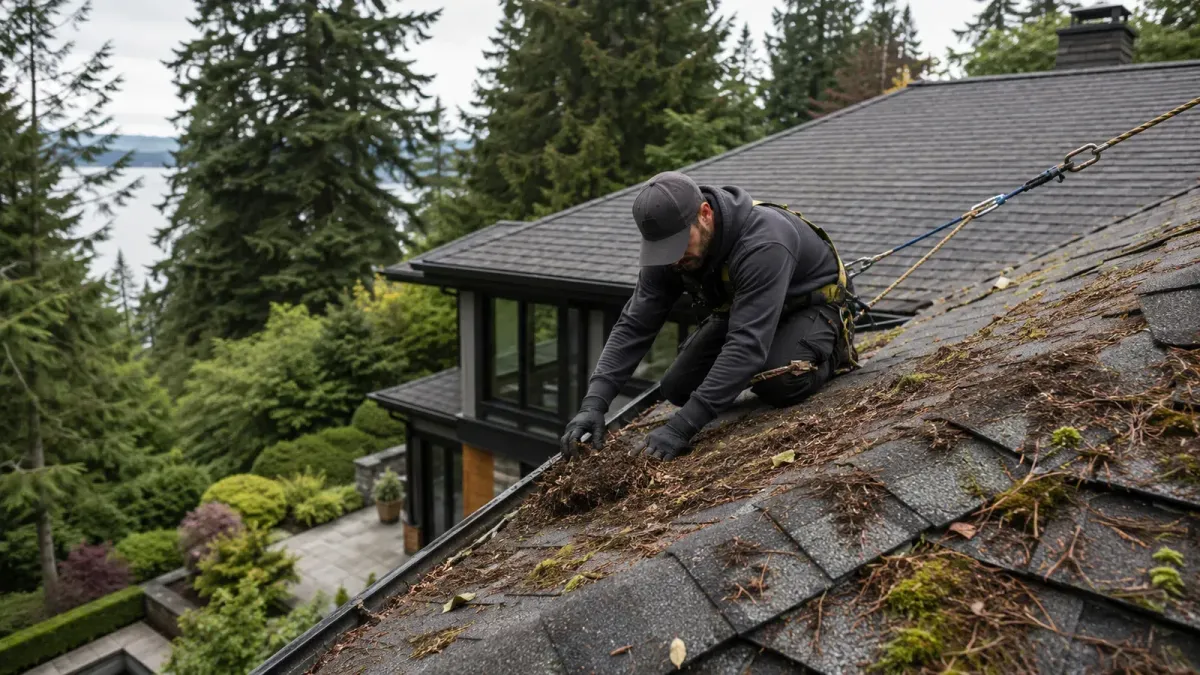
Roof debris removal that clears cedar, fir, and leaf buildup from Seattle rooftops.
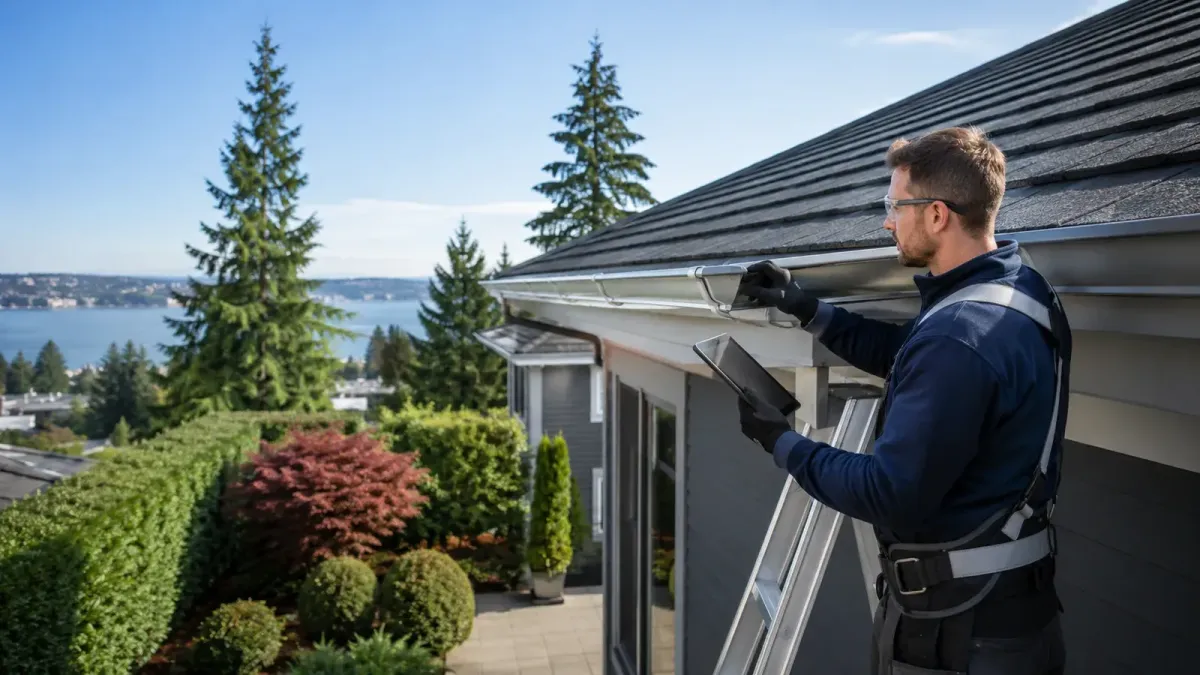
Gutter inspection that catches small Seattle drainage problems before they get expensive.
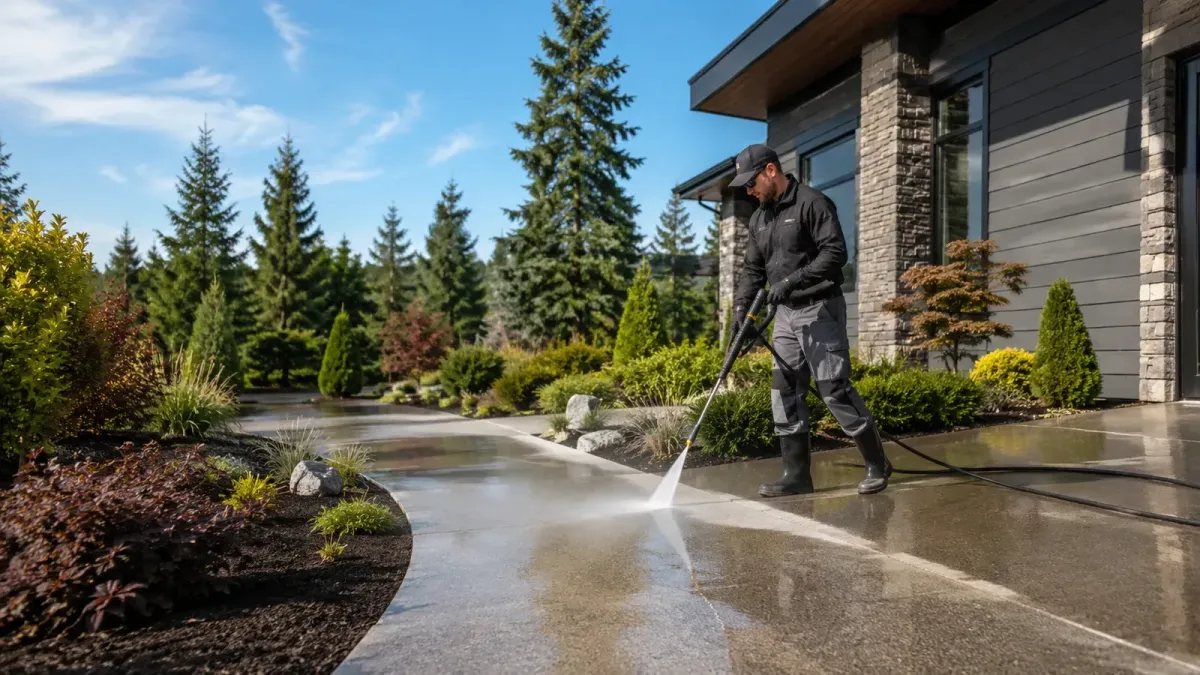
Pressure washing that strips grime and moss from Seattle driveways, siding, and walkways.

Soft wash roof cleaning that removes Seattle moss and algae without high pressure damage.
Frequently Asked Questions
Gutter Cleaning can be complex, and we’re here to provide answers to common questions. Here are some frequently asked questions from our clients.
Frequently Asked Questions about Gutter Cleaning Seattle, WA
How often should I get my gutters cleaned in Seattle?
With Seattle's heavy rainfall and dense fir, cedar, and maple coverage, most homes need cleaning twice a year, typically late spring after oak tassels drop and again in late fall once the leaves finish coming down.
Why do Seattle gutters clog faster than in drier climates?
The Puget Sound climate keeps debris damp year round, so cedar needles, fir cones, and moss break down into a heavy sludge instead of drying out and blowing away. That mat traps water and clogs downspouts well before a single visible blockage forms.
Can clogged gutters really cause water damage to my home?
Yes. When water overflows the gutter it runs down the fascia and pools against the foundation, which is a real concern on Seattle's many sloped lots and older homes. Keeping gutters clear protects your roofline, siding, and basement from costly water intrusion.
Do you remove moss while cleaning the gutters?
We clear moss and organic buildup from the gutters and roofline edge during service, which is common on shaded Seattle roofs. For heavier roof moss we recommend our dedicated moss removal treatment to keep it from returning.
Is professional gutter cleaning safer than doing it myself?
Ladder falls send thousands of homeowners to the hospital every year, and wet Pacific Northwest roofs make footing unpredictable. Our crews are trained, insured, and equipped to work safely at height so you never have to climb a slick ladder.
Which Seattle neighborhoods do you serve?
We serve homes across Seattle including Ballard, Queen Anne, Capitol Hill, Wallingford, and Green Lake, along with nearby cities like Bellevue, Renton, Shoreline, Kirkland, and Burien.
Still Have Questions About Gutter Cleaning Seattle, WA?
Speak With a Trusted Gutter Cleaning Expert Today.
What Our Satisfied Clients Have to Say About Seattle Gutter Cleaning Pros
We pride ourselves on delivering great results and experiences for each client. Hear directly from home and business owners who’ve trusted us with their Gutter Cleaning needs.
The Trusted Gutter Cleaning Expert Near You
Ready to hear more about expert services at Seattle Gutter Cleaning Pros?
Contact us today to receive a detailed, no-obligation quote.
Serving Ballard, Queen Anne, Magnolia, West Seattle, Capitol Hill, Green Lake & Greater Seattle
Mon–Fri 8AM–6PM | Sat 9AM–3PM | Sun Closed


