
Keeping Bellevue Rooflines Clear When the Rain Sets In
Why Eastside Homes Fill Their Gutters So Fast
Homes across Bellevue sit beneath a dense canopy of fir, cedar, and big-leaf maple that sheds year round, and that constant organic load is what fills gutters long before most owners notice. The Eastside catches the same heavy Puget Sound rainfall as the rest of the region, so needles and cones do not dry out and blow clear. Instead they soak, compact, and settle into a dense mat that sits in the trough and slows every downspout. On the larger rooflines common throughout Bellevue, a single clogged section can send an enormous volume of water spilling over the edge during a hard rain. That overflow runs straight down the fascia and pools against the foundation, exactly where no homeowner wants it. The newer construction spread across many Bellevue neighborhoods carries wide gutter runs and complex roof geometry, which means more valleys feeding debris into fewer drainage points. Older homes on the established streets near downtown face the opposite pressure, with aging gutter systems that were never sized for decades of accumulated growth. Either way, the outcome is the same when the troughs fill: water finds the path of least resistance and that path almost always leads toward the structure. Understanding how Eastside tree cover and rainfall combine to overwhelm a gutter system is the starting point for keeping a Bellevue property dry through the long wet season.
What a Thorough Cleaning Actually Covers
What separates a cleaning that lasts from one that fails by the next storm is attention to the parts of the system no one sees from the ground. Compacted cedar and fir debris does not just sit in the visible run; it packs into downspout elbows and outlet drops where it quietly chokes flow. A surface scoop that clears the obvious clumps leaves those hidden blockages in place, and the gutter looks clean right up until the first heavy Bellevue downpour proves otherwise. Removing buildup by hand along the entire run, then flushing each downspout until water moves freely, is the only way to confirm the system can actually carry a storm load. Roof pitch matters too, since the steeper rooflines found on many Eastside homes drive debris and water into the gutters with real force, accelerating both buildup and wear on the brackets holding everything in place. Shaded north-facing sections collect moss that creeps from the roofline into the trough, adding weight that pulls gutters away from the fascia over time. A careful visit accounts for all of it, checking slope, seams, and fastening so a small issue gets caught before the rain turns it into fascia rot or a foundation problem. That kind of operational attention is what actually protects a home through a Pacific Northwest winter.
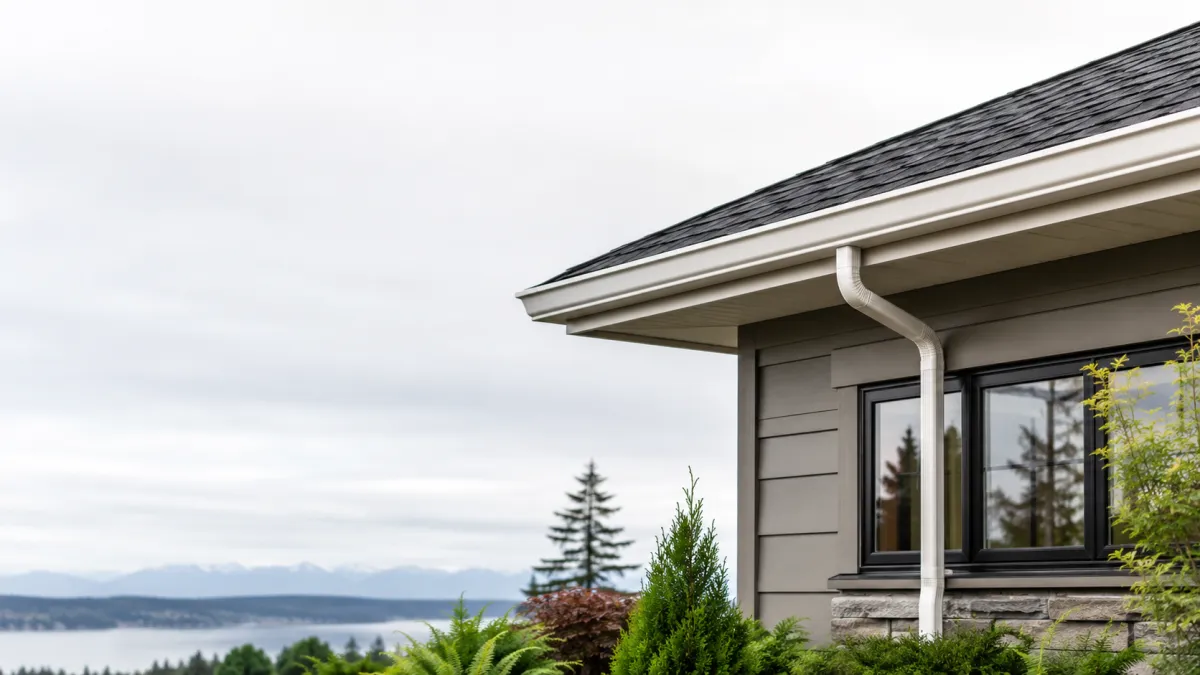
Full Hand Removal Across Every Run
Hand removal is the foundation of any cleaning that holds up on a Bellevue home. Crews work the full length of each gutter run rather than clearing only the reachable clumps near the openings, pulling out the compacted needles, cones, and decomposed leaf matter that the rain has pressed into a solid layer. On the wider rooflines typical across the Eastside, that buildup can run continuously for long stretches, and skipping sections is how a gutter that looked clean overflows weeks later. Pulling debris out by hand also gives a clear view of the trough itself, revealing rust spots, separated seams, or low spots holding standing water that a quick pass would never catch. Every bit of removed material is bagged and hauled away rather than dropped into the beds below, so the cleanup leaves the property as it should be. This is slow, deliberate work, and on a home surrounded by mature Bellevue tree cover it is the difference between a gutter that carries the winter and one that quits during the first real storm. Doing it thoroughly the first time means fewer surprises when the rain arrives in earnest and the system finally gets tested under load. A gutter cleared with that level of care is one a Bellevue owner can stop thinking about once the weather turns.
Downspouts Flushed and Flow Confirmed
A clear gutter is only half the system, because water still has to travel down and away from the house. Downspouts are where compacted Bellevue debris loves to hide, packing into elbows and underground transitions where nothing is visible from above. Flushing each one under real water volume is the only dependable way to know it carries a full storm load rather than just the trickle of a light drizzle. When a downspout stays silent during heavy rain while water spills over the gutter nearby, that silence almost always means a hidden blockage is forcing water the wrong direction. Crews run water through every drop and watch for the steady discharge that confirms a clear path, then trace any sluggish line back to the obstruction and clear it completely. On the sloped lots found in many Bellevue neighborhoods, a failed downspout sends water straight toward the foundation, so confirming flow is not a formality but the whole point of the visit. Correcting that discharge so it carries water away from the structure is what turns months of steady Eastside rain into a non-event instead of a source of slow, expensive damage. Getting the underground path right is often what separates a home that stays dry from one that fights moisture at the foundation all winter long.

System Checked Before the Storms Hit
The final part of any worthwhile visit is verification, because no cleaning should end on assumption. Before crews leave a Bellevue property, they confirm that water drains the way it must under genuine flow, watching each downspout discharge and checking that the gutters carry water toward the drops instead of pooling in the middle of a run. This is also when the rest of the system gets a careful look: brackets that have loosened under the weight of wet debris, seams beginning to separate, and sections starting to pull away from the fascia after seasons of heavy load. Catching those early matters enormously on Eastside homes, where the steady rain exploits any weakness fast and a minor sag becomes overflow that reaches the foundation. Owners receive a straightforward account of anything worth addressing, with no pressure and no invented urgency, just an honest read on where the system stands heading into the wet months. That kind of closing review turns a routine cleaning into real protection, giving a Bellevue homeowner a clear picture of their drainage well before the next downpour puts it to the test. It is the step that lets an owner head into the wet season knowing the system has been confirmed sound rather than simply assumed clear.
Comprehensive Gutter Cleaning Services in Seattle
Tailored to Your Needs
From routine gutter cleaning to moss removal and full downspout repair, we offer the complete range of exterior services Seattle homes need to survive the rainy season. Explore our core services below.
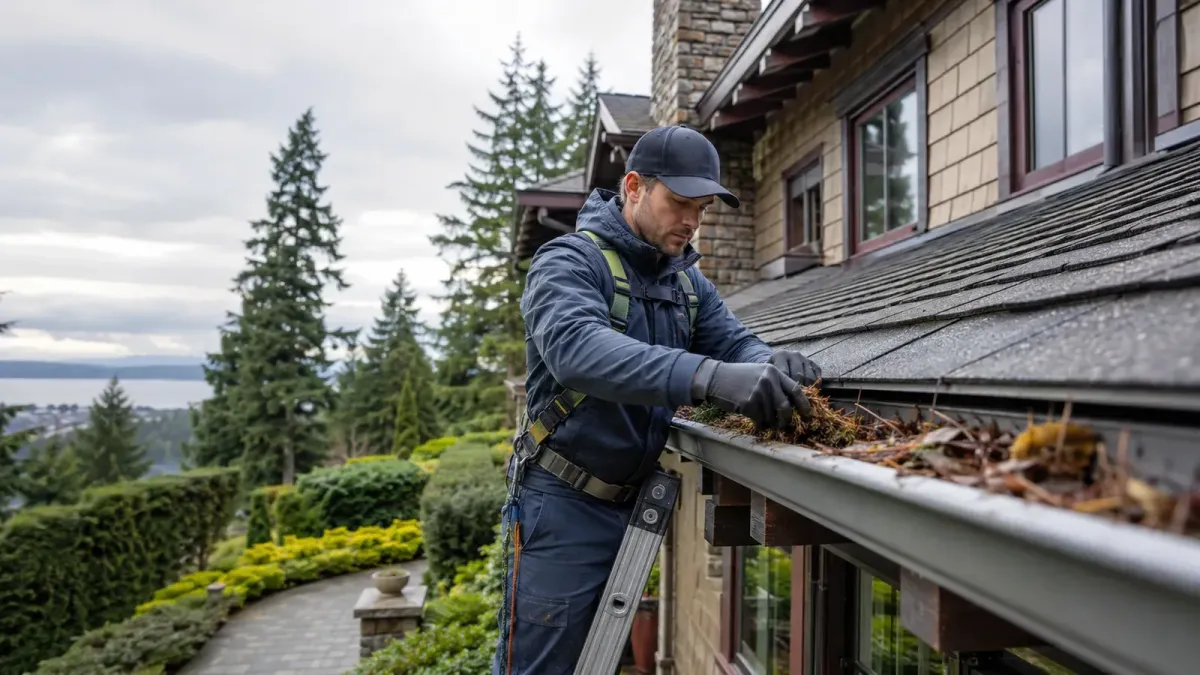
Hand cleaning and downspout flushing that keeps Seattle rainwater flowing away from your home.
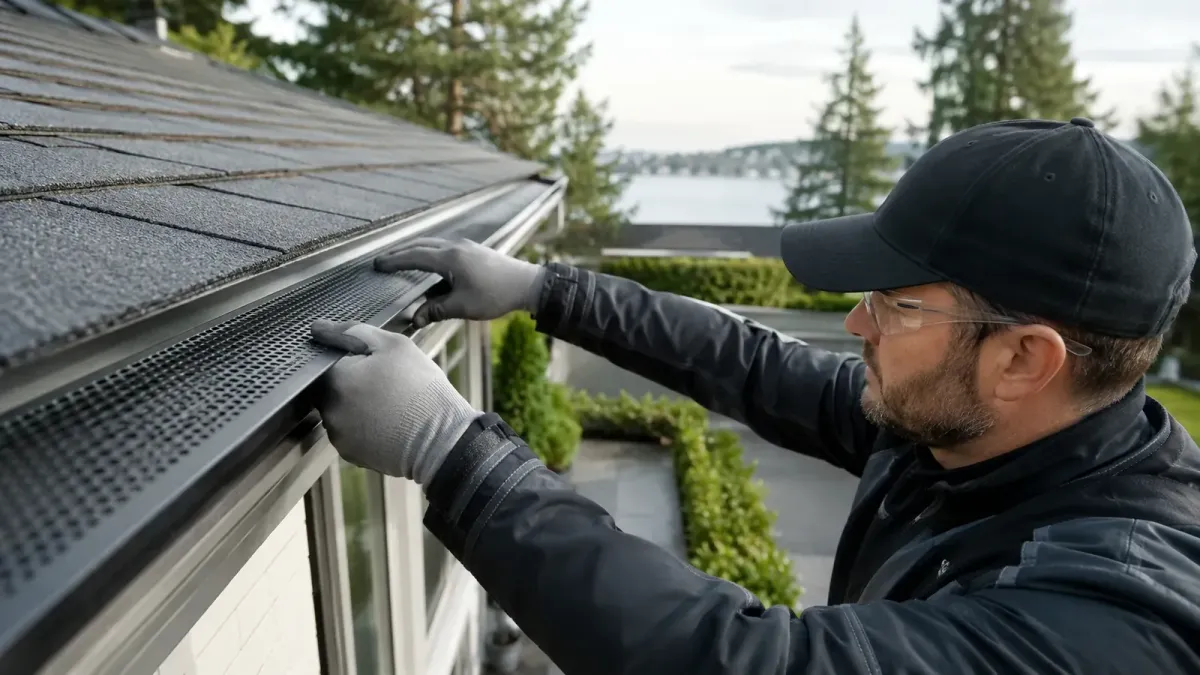
Gutter guard systems that block Seattle debris while letting heavy rainfall pass through.
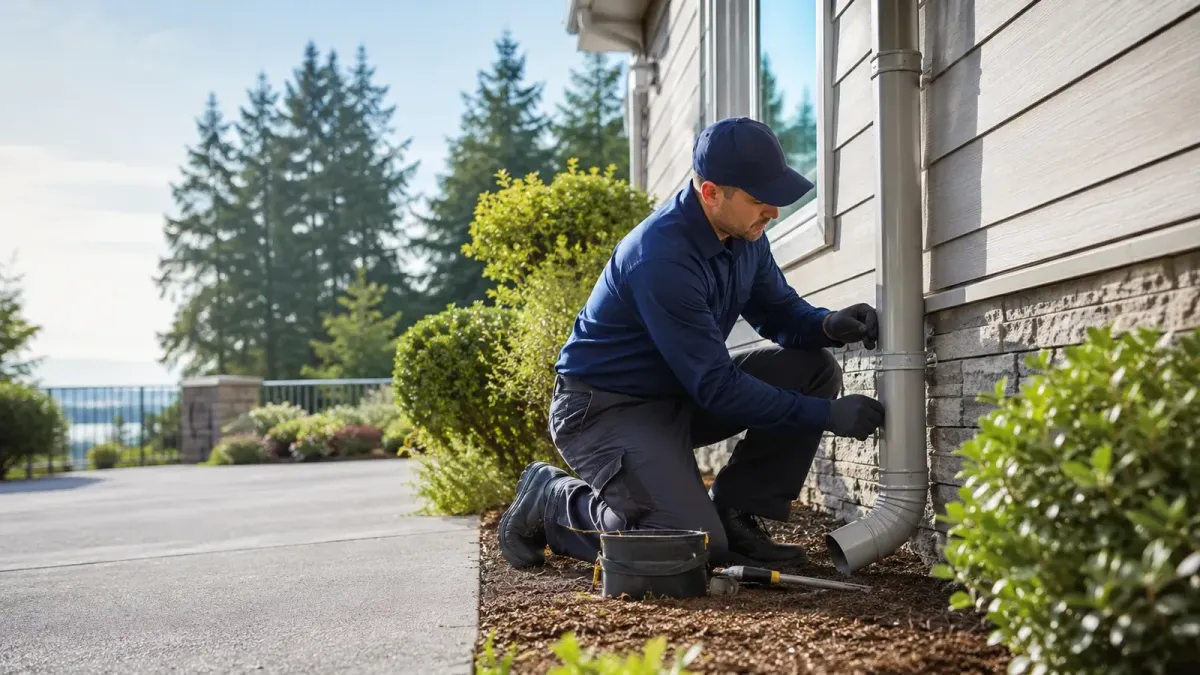
Downspout cleaning and repair that clears hidden clogs and restores proper drainage.
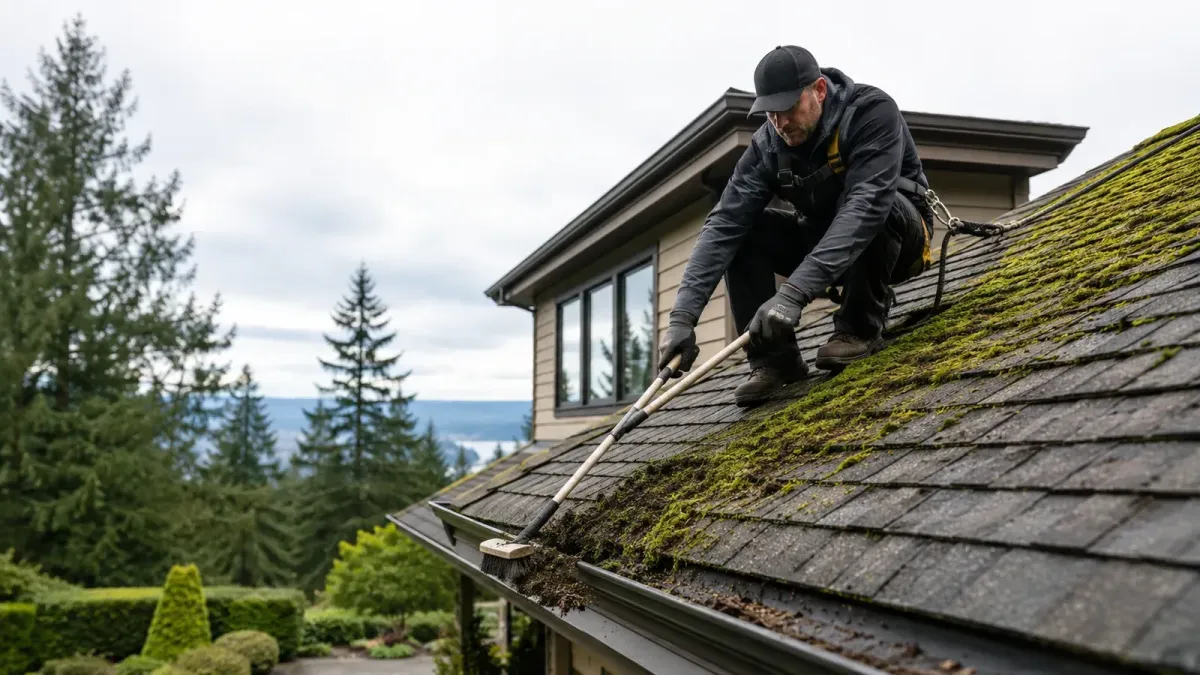
Roof moss removal that protects shaded Seattle roofs from long term damage.
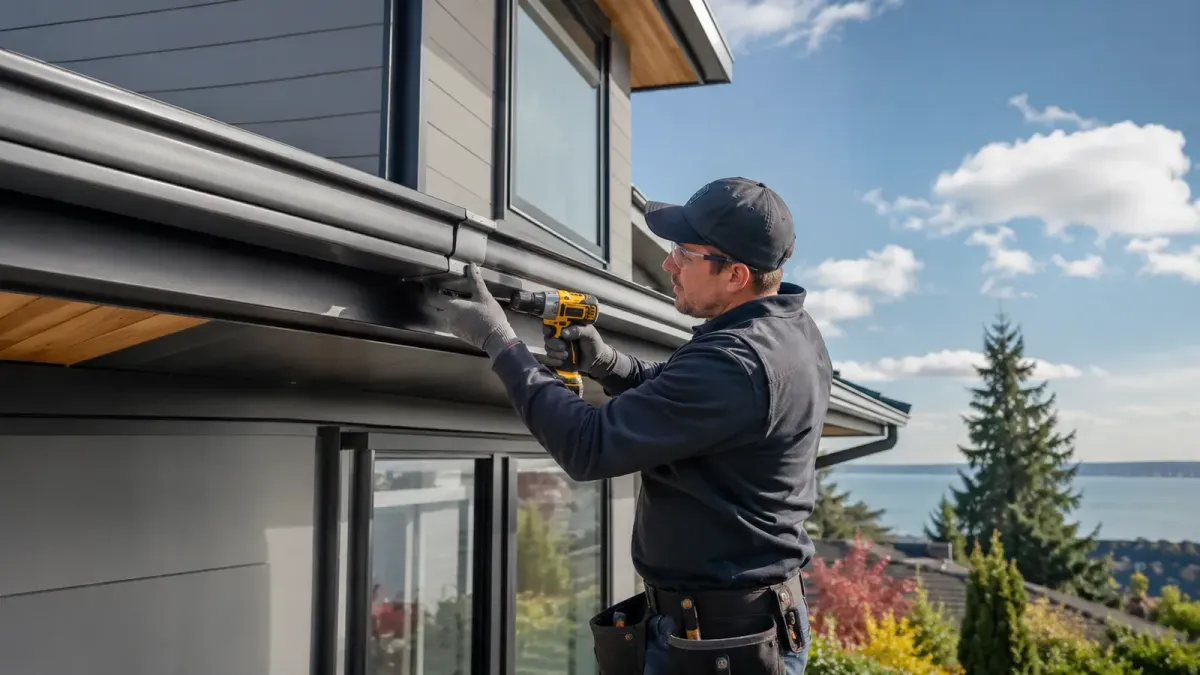
Gutter repair that fixes sagging, leaking, and pulling sections before winter rains hit.
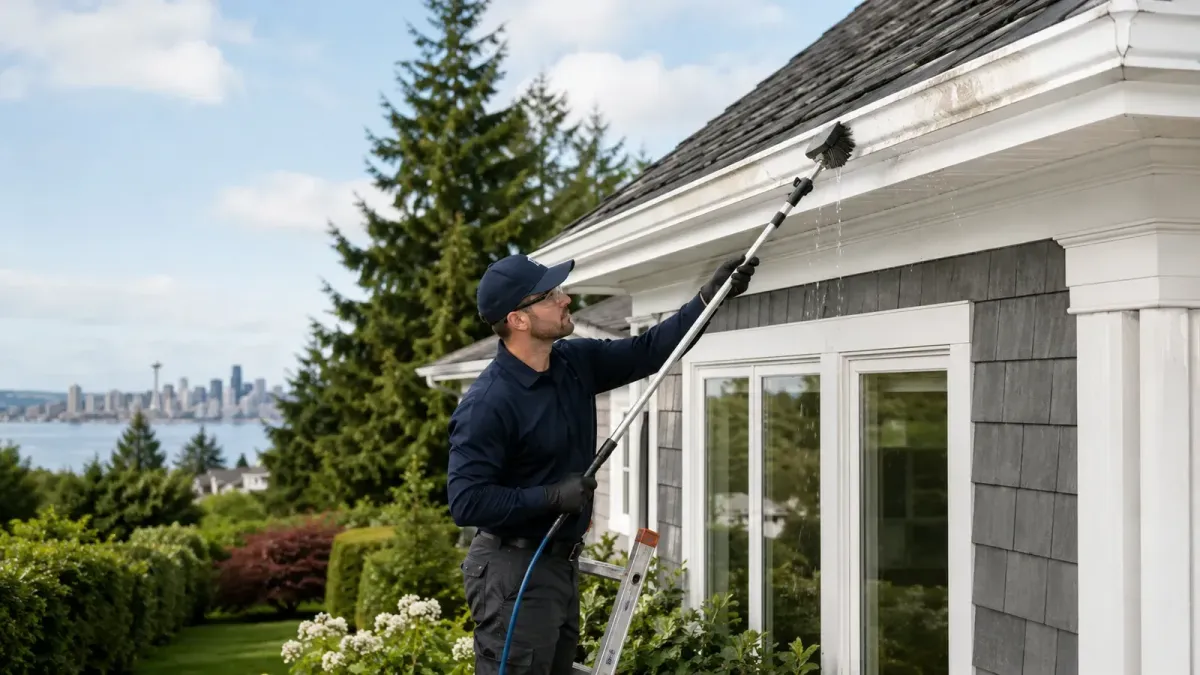
Gutter whitening that lifts the dark Pacific Northwest streaks off your exterior gutters.
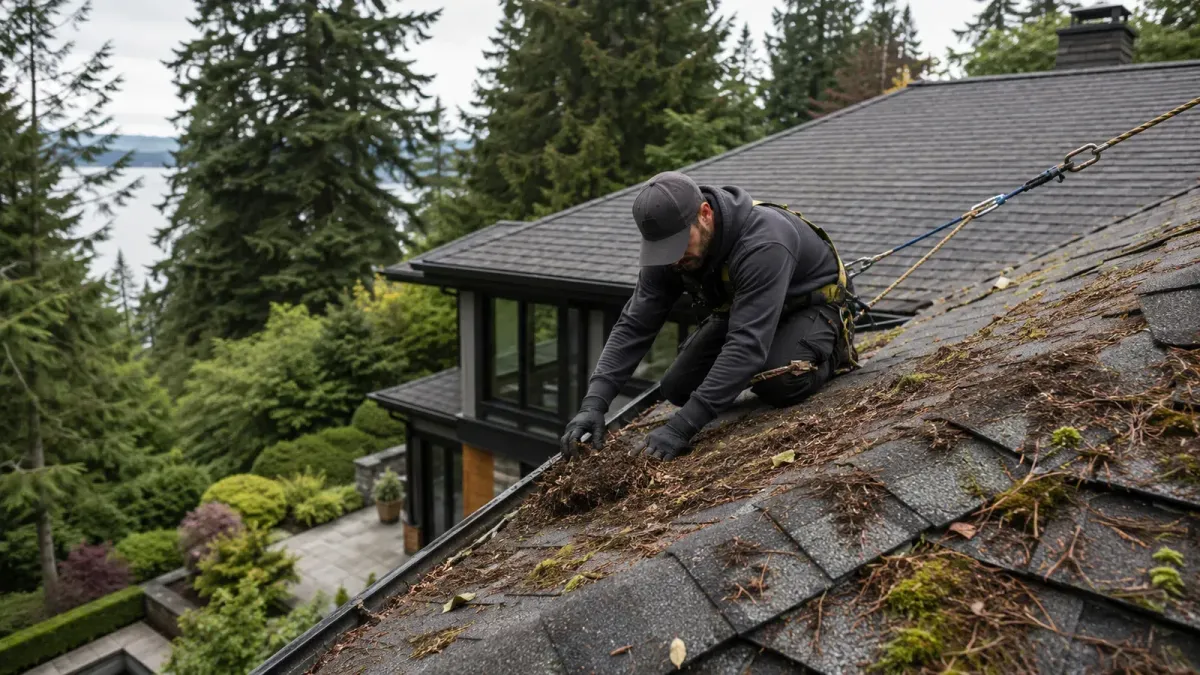
Roof debris removal that clears cedar, fir, and leaf buildup from Seattle rooftops.
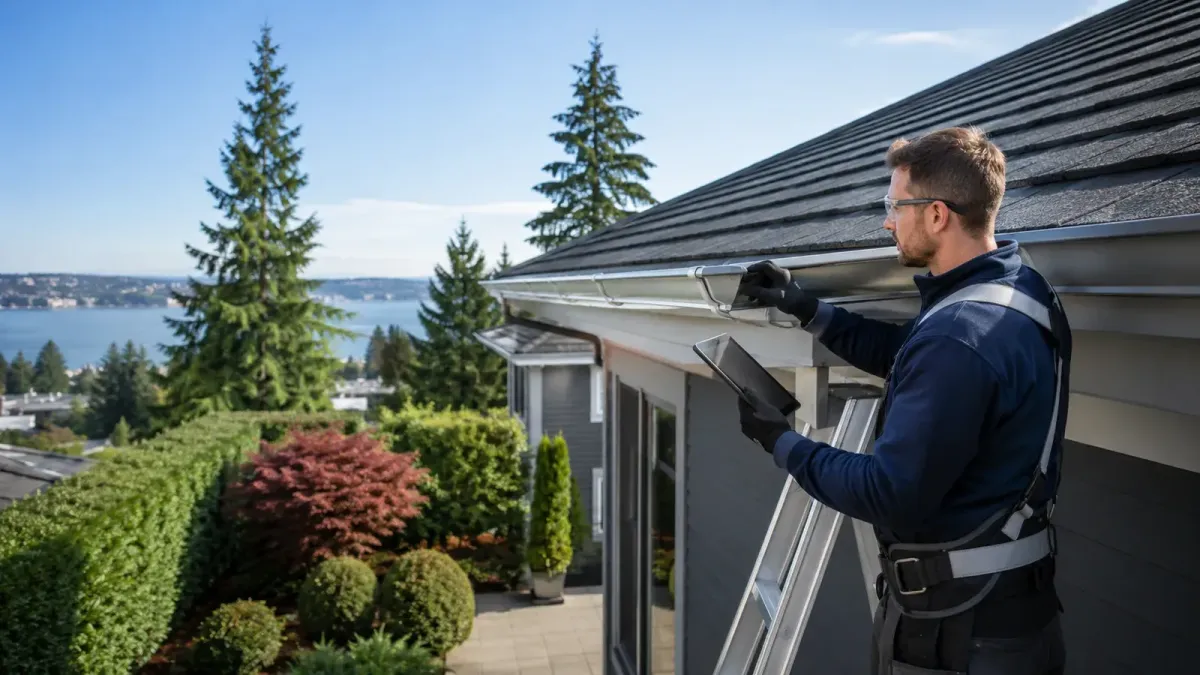
Gutter inspection that catches small Seattle drainage problems before they get expensive.
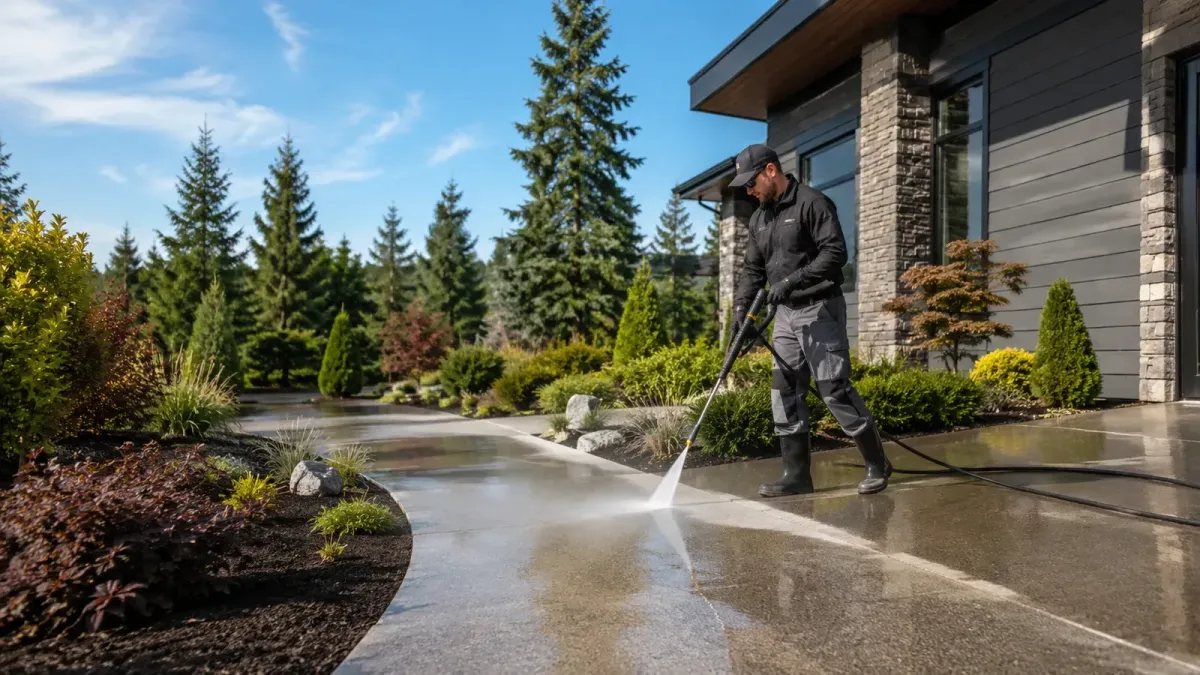
Pressure washing that strips grime and moss from Seattle driveways, siding, and walkways.

Soft wash roof cleaning that removes Seattle moss and algae without high pressure damage.
Frequently Asked Questions
Gutter Cleaning can be complex, and we’re here to provide answers to common questions. Here are some frequently asked questions from our clients.
Frequently Asked Questions about Gutter Cleaning Seattle, WA
How often should I get my gutters cleaned in Seattle?
With Seattle's heavy rainfall and dense fir, cedar, and maple coverage, most homes need cleaning twice a year, typically late spring after oak tassels drop and again in late fall once the leaves finish coming down.
Why do Seattle gutters clog faster than in drier climates?
The Puget Sound climate keeps debris damp year round, so cedar needles, fir cones, and moss break down into a heavy sludge instead of drying out and blowing away. That mat traps water and clogs downspouts well before a single visible blockage forms.
Can clogged gutters really cause water damage to my home?
Yes. When water overflows the gutter it runs down the fascia and pools against the foundation, which is a real concern on Seattle's many sloped lots and older homes. Keeping gutters clear protects your roofline, siding, and basement from costly water intrusion.
Do you remove moss while cleaning the gutters?
We clear moss and organic buildup from the gutters and roofline edge during service, which is common on shaded Seattle roofs. For heavier roof moss we recommend our dedicated moss removal treatment to keep it from returning.
Is professional gutter cleaning safer than doing it myself?
Ladder falls send thousands of homeowners to the hospital every year, and wet Pacific Northwest roofs make footing unpredictable. Our crews are trained, insured, and equipped to work safely at height so you never have to climb a slick ladder.
Which Seattle neighborhoods do you serve?
We serve homes across Seattle including Ballard, Queen Anne, Capitol Hill, Wallingford, and Green Lake, along with nearby cities like Bellevue, Renton, Shoreline, Kirkland, and Burien.
Still Have Questions About Gutter Cleaning Seattle, WA?
Speak With a Trusted Gutter Cleaning Expert Today.
What Our Satisfied Clients Have to Say About Seattle Gutter Cleaning Pros
We pride ourselves on delivering great results and experiences for each client. Hear directly from home and business owners who’ve trusted us with their Gutter Cleaning needs.
The Trusted Gutter Cleaning Expert Near You
Ready to hear more about expert services at Seattle Gutter Cleaning Pros?
Contact us today to receive a detailed, no-obligation quote.
Serving Ballard, Queen Anne, Magnolia, West Seattle, Capitol Hill, Green Lake & Greater Seattle
Mon–Fri 8AM–6PM | Sat 9AM–3PM | Sun Closed


